Toxicology and Nanotechnology
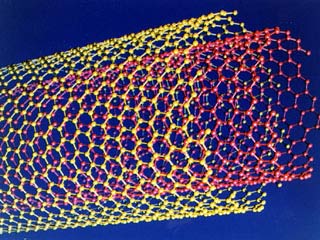
Nanotechnology is often depicted as the technology of the 21st century and for sure the potential benefits of nanotechnology are many. Knowledge about possible health risks and environmental hazards following the development of nanotechnology is still sparse and more research is needed. There is also a need to examine whether the present law covers nanoparticles and products.
Nanotechnology is a general term that includes all technologies working on the nanoscale – from 0,1 to 100 nanometre. Nanotechnology is an interdisciplinary subject area and involves disciplines such as physics, chemistry, biology, medicine, electronics etc. The purpose of working on the nanoscale is to create and use materials and components with new functional properties.
Although nanotechnology is still at an early stage in its development, there are already products on the market that have been produced by using nanotechnology; e.g. sunscreen, catalysts, hard discs and paint.
A challenge is, though, that conventional knowledge on chemical, physical and biological effects on human beings and the environment is not necessarily useful when operating at the nanoscale. Research on health effects and environmental effects is therefore in high demand both at national and international level.
Purpose of the project
The aim of the project was to assess whether nanotechnology can be handled within the existing framework of regulation. Furthermore, the project discuss and give recommendations to how risk assessment of nanotechnology can be systematized.
The three main questions for the project to answer are:
- How is research and development of nanotechnology regulated at the moment?
- Can regulation of nano-particles and products be executed within the current law?
- How can risk assessment of nanotechnology be systematized?
Methodology
The Danish Board of Technology appointed a working group of professionals with the object to draw up a report. The project included a workshop where other professionals got an opportunity to contribute to the discussion. The report address the above-mentioned questions and bring forward some recommendations.
The working group consisted of:
- Kim Christiansen, LCA Consultants
- Stig Irving Olsen, Technical University of Denmark (DTU)
- Birgitte Rasmussen, Risø National Laboratory
- Christine Skak, Danish Toxicology Centre (DTC)
- Susan Stipp, Nano-Science Centre, University of Copenhagen (KU)
- Camilla Tidemand-Lichtenberg, NaNet
- Håkan Wallin, National Institute of Occupational Health
Time frame
The project were launched in October 2005 and finished in June 2006.